
Proven Local SEO Strategies to Get More Calls, Book More Jobs, and Dominate Your Service Area













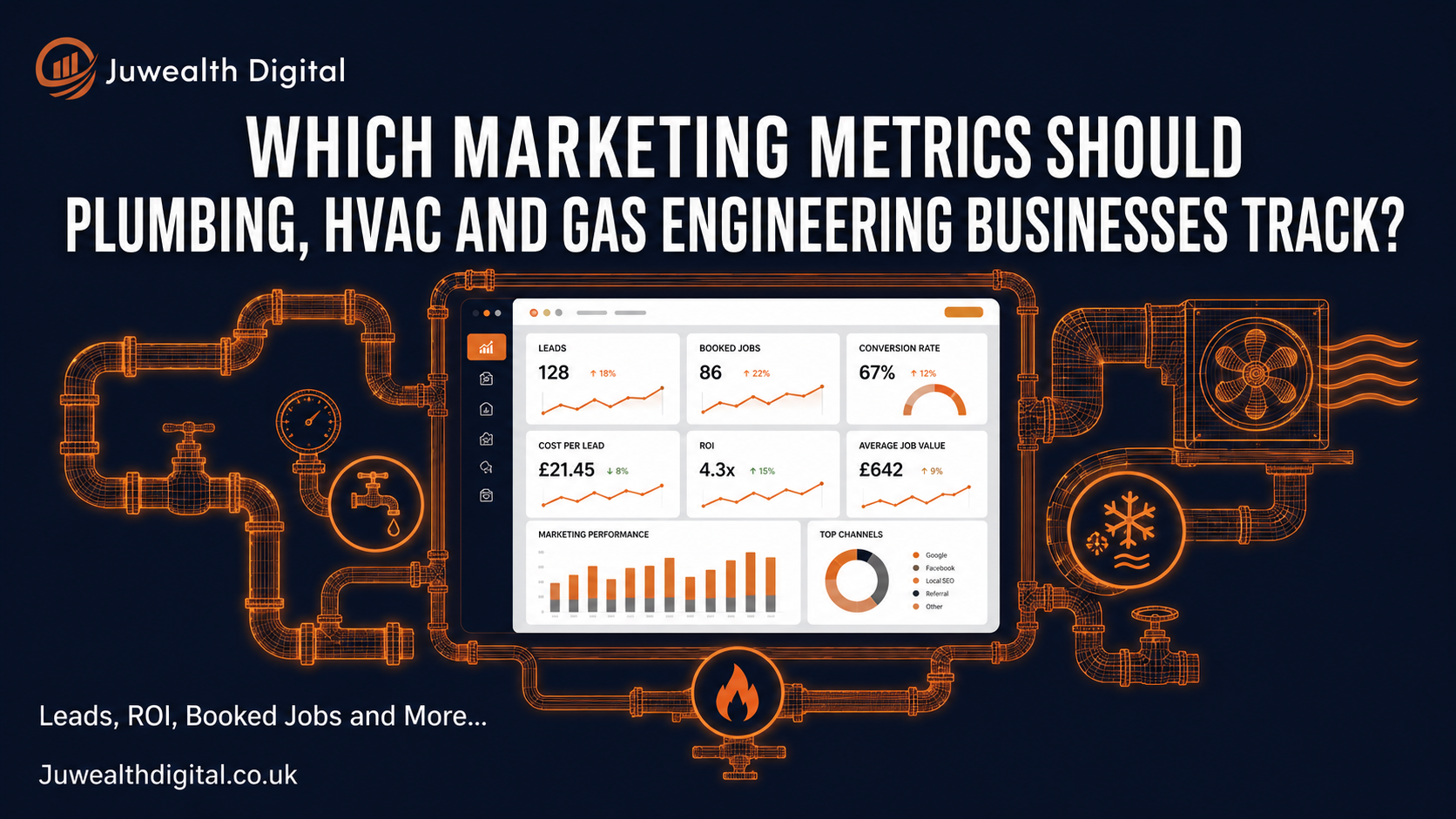
Many plumbing, HVAC and gas engineering businesses invest in marketing every month but still struggle to answer one important question: what is actually working?
It is easy to look at total calls, website visits, or lead volume and assume performance is strong. But those numbers only show activity. They do not always show whether the marketing is bringing in the right type of work or producing a worthwhile return.
To make better decisions, businesses need to track the numbers that show quality, efficiency, and real commercial value. These metrics matter because businesses can now track marketing performance more accurately than before.
Instead of only looking at website traffic or total calls, plumbing, HVAC and gas engineering businesses can track actions that show real intent and real results. For example, they can see when someone calls from a Google ad, fills in a form on the website, or comes through Google Search.
This makes it much easier to understand what is actually working, which channels deserve more investment, and where money may be being wasted. When the right metrics are tracked consistently, businesses can make better decisions, improve performance faster, and reduce guesswork.
The first metric to track is where your leads are coming from. For most plumbing, HVAC and gas engineering businesses, this includes channels such as:
-Google Maps
-Google Ads
-Organic search
-Social media
-Direct website enquiries
-Referrals
If you do not know which channel is producing each lead, it becomes difficult to know where your budget should go. Lead source data helps you see what is performing well and what may need to be improved or reduced.
Lead volume on its own can be misleading. A more useful question is: how much are you paying for each lead?
Cost per lead helps businesses judge whether a campaign is efficient. A source that produces fewer leads may still be stronger if those leads cost less and are more likely to convert.
For plumbing, HVAC and gas engineering businesses, this metric gives useful context around paid advertising, local SEO, and lead generation campaigns.
Once an enquiry comes in, how often does it become a booked appointment?
This metric shows whether the issue is:
-Lead quality
-Call handling
-Response speed
-Follow-up
-Quoting
-Scheduling
If conversion from lead to booked job is low, increasing ad spend may not be the answer. In many cases, the bigger opportunity is to improve the system that handles enquiries after they arrive.
Return on investment helps you understand whether your marketing spend is producing enough value.
A campaign may bring in leads, but if those leads do not turn into worthwhile revenue, the return may still be weak. ROI helps businesses compare channels more commercially and decide where future budget should go.
For plumbing, HVAC and gas engineering businesses, this is one of the most important ways to move from guesswork to confident decision-making.
Not every customer is worth the same amount over time.
A one-off repair may bring immediate revenue, but a customer who returns for servicing, upgrades, future repairs, or larger work can be far more valuable in the long run.
That is why lifetime customer value matters. It helps businesses understand why long-term marketing strategies such as SEO, brand visibility, and retention systems are worth investing in.
Visibility still matters, especially for local service businesses.
Important visibility metrics include:
-Google Maps presence
-Google Business Profile
-Views and calls
-Keyword positions for core services
-Organic website traffic
-Clicks from search
These numbers help show whether your business is building local momentum online or whether competitors are becoming easier to find.
Reviews have a direct impact on both visibility and conversions.
For plumbing, HVAC and gas engineering businesses, it is worth tracking:
-Total number of reviews
-Average rating
-Review frequency
-Recent review activity
A strong review profile helps reduce hesitation and makes the business feel more trustworthy. It can also improve local visibility over time.